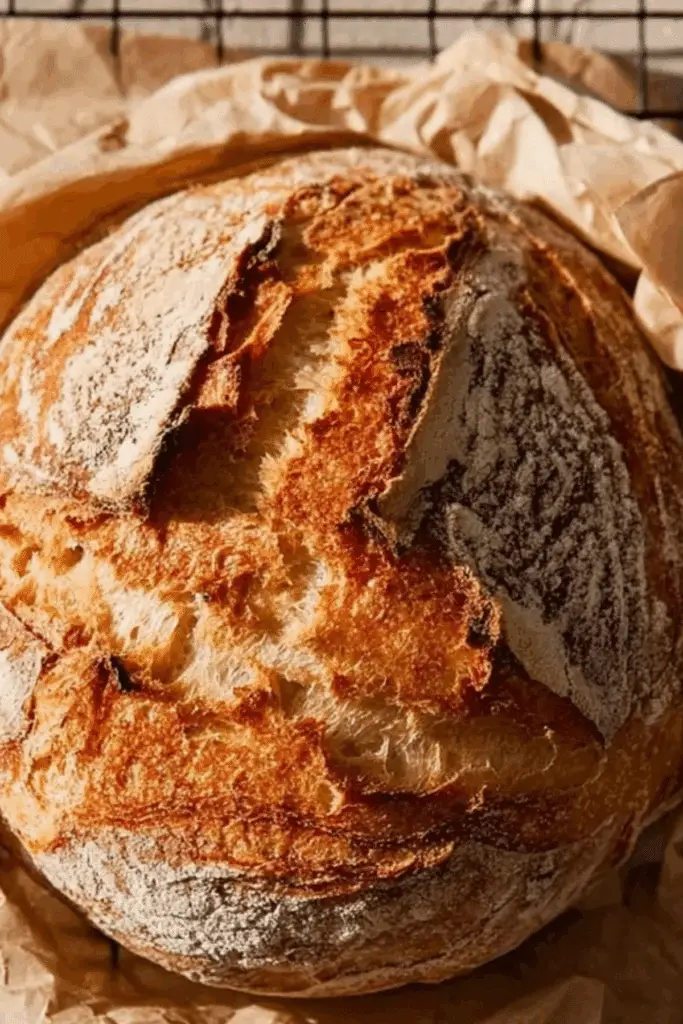
Making a fresh, crusty, and flavorful loaf of Dutch oven sourdough bread is one of the most rewarding experiences in baking. Whether you’re a beginner or a seasoned baker, this classic recipe will guide you through the process of creating a perfectly baked sourdough boule using just a few basic ingredients and the magic of a Dutch oven. The result? A crispy golden crust, chewy interior, and that unmistakable tang that makes sourdough so irresistible.

Table of Contents
Why This Dutch Oven Sourdough Bread Is Perfect for You
This Dutch oven sourdough bread recipe is perfect for anyone looking for a delicious, homemade bread without the need for complicated ingredients or specialized equipment. With just a few simple steps, you’ll be able to bake a loaf that rivals any artisanal bakery. The beauty of this method lies in the Dutch oven’s ability to trap steam, creating a crisp crust and a fluffy, airy crumb inside. It’s a straightforward recipe that requires patience and a bit of time, but the effort is well worth it.
Ingredients for Dutch Oven Sourdough Bread
Before you start baking, gather these essential ingredients for your Dutch oven sourdough bread:
- Sourdough Starter: The base of your bread, packed with natural wild yeast. Ensure it’s active and bubbly.
- Bread Flour: Provides structure and strength to your dough for that perfect chewy texture.
- Water: Hydrates the flour and activates the yeast. Tap water works fine.
- Salt: Sea salt is ideal for flavoring the dough without interfering with fermentation.
- Dutch Oven: A 6-quart size is ideal for creating the perfect environment for baking your sourdough.
Ingredient Alternatives
If you’re looking to adjust the recipe for dietary preferences or availability, consider these alternatives:
- Flour: You can substitute bread flour with whole wheat flour for a denser, more rustic loaf or try a 50/50 mix of all-purpose and whole wheat flour for added flavor.
- Salt: If you prefer a lower-sodium version, use Himalayan pink salt or any non-iodized salt.
Step-by-Step Instructions for Dutch Oven Sourdough Bread
Creating Dutch oven sourdough bread requires a few simple steps but does require patience. Here’s a breakdown:
- Mix the Dough: In a large bowl, combine your sourdough starter, bread flour, water, and salt. Mix until a dough ball forms.
- Stretch and Fold: Turn the dough onto a clean, water-sprayed surface. Stretch and fold the dough every 30 minutes for at least 3 hours. This will help develop the gluten and structure of the bread.
- Shape the Dough: After the final stretch and fold, shape the dough into a round boule. Let it rest and rise for about an hour.
- Proof the Dough: Place the dough in a proofing basket or a bowl lined with flour. Cover with a tea towel and refrigerate overnight for 8-12 hours.
- Bake the Bread: Preheat your Dutch oven to 450°F. Score the dough with a sharp knife, then carefully place it into the hot Dutch oven. Bake with the lid on for 30 minutes, then remove the lid and bake for an additional 20-30 minutes until the bread is golden brown and sounds hollow when tapped.
Tips & Tricks for Perfect Dutch Oven Sourdough
Baking Dutch oven sourdough bread can be tricky if you’re not familiar with the process. Here are some tips to ensure your success:
- Use a spray bottle: When stretching and folding the dough, avoid using flour on your surface. Instead, lightly mist your counter and hands with water to prevent sticking without overloading the dough with flour.
- Patience is key: Don’t rush the fermentation process. Letting the dough rest and rise for the proper amount of time is crucial to achieving that tangy sourdough flavor.
- Monitor the temperature: If your home is warmer than 75°F, you might need to reduce the resting time between folds to one hour. If it’s cooler, let it rest for longer.
Pairing Ideas and Variations for Dutch Oven Sourdough Bread
Once you’ve perfected your Dutch oven sourdough bread, you can experiment with a variety of flavors and textures:
- Add-ins: Try folding in herbs, cheese, seeds, or even dried fruits to give your sourdough a unique twist.
- Serving suggestions: Pair your freshly baked sourdough with soups, stews, or use it to make delicious sandwiches.
- Storage tips: To keep your bread fresh, store it in a bread bag or wrap it in a clean tea towel. Sourdough bread can last up to 4-5 days at room temperature.
Why Dutch Oven Sourdough Is Healthier
Sourdough is more than just delicious — it’s also easier to digest than regular bread. The long fermentation process breaks down the phytic acid in the flour, making the bread more nutrient-dense. Plus, the lactic acid bacteria that naturally occur in the starter help enhance the bread’s bioavailability, allowing your body to absorb more nutrients like magnesium, zinc, and potassium.
Conclusion: Mastering the Art of Dutch Oven Sourdough Bread
Baking Dutch oven sourdough bread is a fulfilling experience that brings together patience, simplicity, and the joy of crafting something from scratch. With the right ingredients and a bit of practice, anyone can master this technique and enjoy a fresh, flavorful loaf of homemade bread. Whether you’re new to baking or a seasoned pro, this recipe serves as a solid foundation for creating artisanal sourdough bread in the comfort of your own kitchen. So, grab your starter, fire up the oven, and soon you’ll have a warm, crusty boule to enjoy with family and friends!
FAQ: Common Questions About Dutch Oven Sourdough Bread
Can I use all-purpose flour instead of bread flour for Dutch oven sourdough bread?
Yes, you can substitute all-purpose flour for bread flour in this Dutch oven sourdough bread recipe. However, using bread flour results in a higher gluten content, which gives the bread a chewier texture and better structure. If you don’t have bread flour, all-purpose flour will still work, but the loaf might be slightly softer and less airy.
How do I know when my sourdough starter is ready to use?
Your sourdough starter is ready to use when it’s bubbly, active, and has doubled in size within 4-6 hours of feeding. A simple test to check its readiness is the “float test” — drop a spoonful of starter into a glass of water. If it floats, it’s ready to be used for baking Dutch oven sourdough bread.
Can I make Dutch oven sourdough bread without a proofing basket?
While a proofing basket helps the dough maintain its shape and gives it a nice texture, you can still bake Dutch oven sourdough bread without one. Simply use a bowl lined with a well-floured tea towel to shape your dough. Just make sure the dough is covered and allowed to rise for the proper amount of time before baking.
More Relevant Recipes
- Soft Pumpkin Sourdough Bread
- Super Moist Banana Bread Loaf
- Pumpkin Sourdough Bagels with Pumpkin Spice Cream Cheese
Dutch Oven Sourdough Bread Recipe

This Dutch Oven Sourdough Bread recipe results in a deliciously crispy crust and soft, airy interior. The process involves a simple mix of ingredients and patience for the fermentation process, ensuring a loaf with deep flavor and perfect texture.
- Prep Time: 20 minutes
- Cook Time: 1 hour
- Total Time: 7 hours 20 minutes
- Yield: 1 loaf 1x
- Category: Bread
- Method: Baking
- Cuisine: American
Ingredients
- 500g Organic Bread Flour
- 300g Water
- 100g Sourdough Starter
- 10–15g Sea Salt
Instructions
- In a large bowl, combine the sourdough starter, bread flour, water, and salt. Stir until a dough ball forms.
- Transfer the dough to a clean, water-sprayed surface and stretch and fold it every 30 minutes for at least 3 hours.
- Shape the dough into a round boule and let it rest for an hour.
- Place the dough into a floured proofing basket or a bowl lined with a tea towel, cover it, and refrigerate overnight for 8-12 hours.
- Preheat your Dutch oven to 450°F. Carefully turn the dough out onto parchment paper, score the top, and place it into the hot Dutch oven.
- Bake for 30 minutes with the lid on, then remove the lid and bake for another 20-30 minutes until golden brown and crispy.
- Let the bread cool completely before slicing and serving.
Notes
- Use a spray bottle with water to mist your hands and counter while handling the dough to prevent sticking.
- Ensure the dough rests long enough for proper fermentation to enhance the flavor and texture.
- If your home is warmer than 75°F, you can reduce the time between each stretch and fold to one hour.
- Store leftover sourdough in a bread bag or wrapped in a tea towel for up to 4-5 days.
Nutrition
- Serving Size: 1 slice (1/10 of the loaf)
- Calories: 150
- Sugar: 0g
- Sodium: 200mg
- Fat: 1g
- Saturated Fat: 0g
- Unsaturated Fat: 0.5g
- Trans Fat: 0g
- Carbohydrates: 30g
- Fiber: 1g
- Protein: 4g
- Cholesterol: 0mg